Summary
Hokuriku Shinkansen
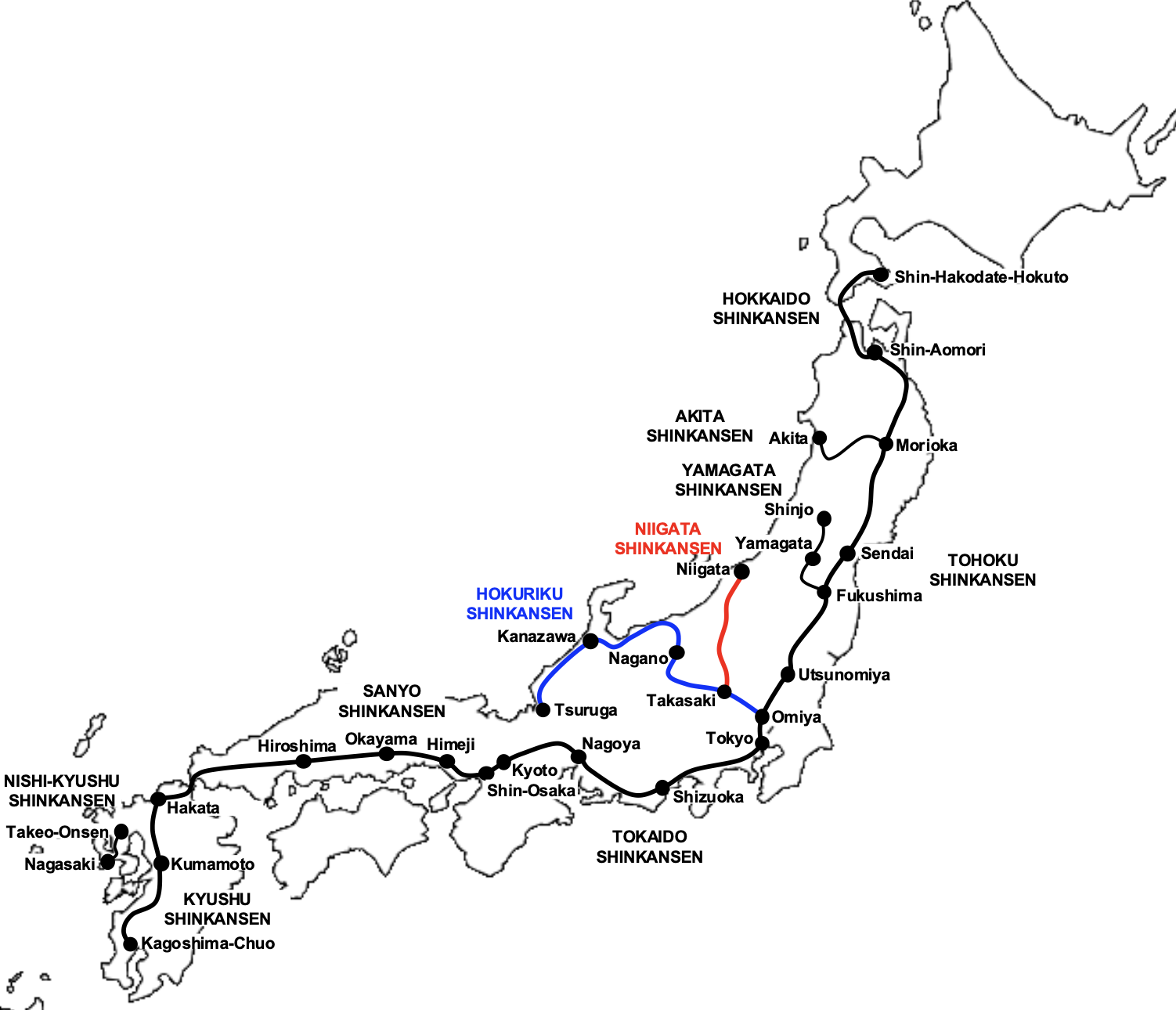
The Hokuriku Shinkansen connects Tokyo with Nagano, Toyama, Kanazawa, Fukui and Tsuruga, providing a fast and scenic route through Japan’s northern Alps and the Hokuriku region. There are 4 main types of services: Kagayaki, Hakutaka, Tsurugi, and Asama. All services are operated with the 12-car E7/W7 series trains, offering comfortable seating and onboard facilities. The Hokuriku Shinkansen is a convenient gateway to both historical towns and natural beauty.
Highlights along the route include Zenko-ji Temple in Nagano, the Tateyama Kurobe Alpine Route from Toyama, and Kenroku-en Garden and Kanazawa Castle in Kanazawa. Seasonal attractions such as winter snow scenery and seafood from the Sea of Japan are also popular.
From Tsuruga Station, travelers can easily transfer to the Limited Express Thunderbird for a direct and comfortable journey to Kyoto and Osaka, or take the Limited Express Shirasagi to reach Maibara and Nagoya.
Joetsu Shinkansen
The Joetsu Shinkansen links Tokyo with Niigata.
There are 2 main services: Toki and Tanigawa.
Popular attractions along the route include the hot spring towns of Minakami and Echigo-Yuzawa, famous for winter sports, as well as Niigata’s beautiful rice terraces, sake breweries, and coastal scenery along the Sea of Japan.
The line is also served by 12-car E7 series trains.
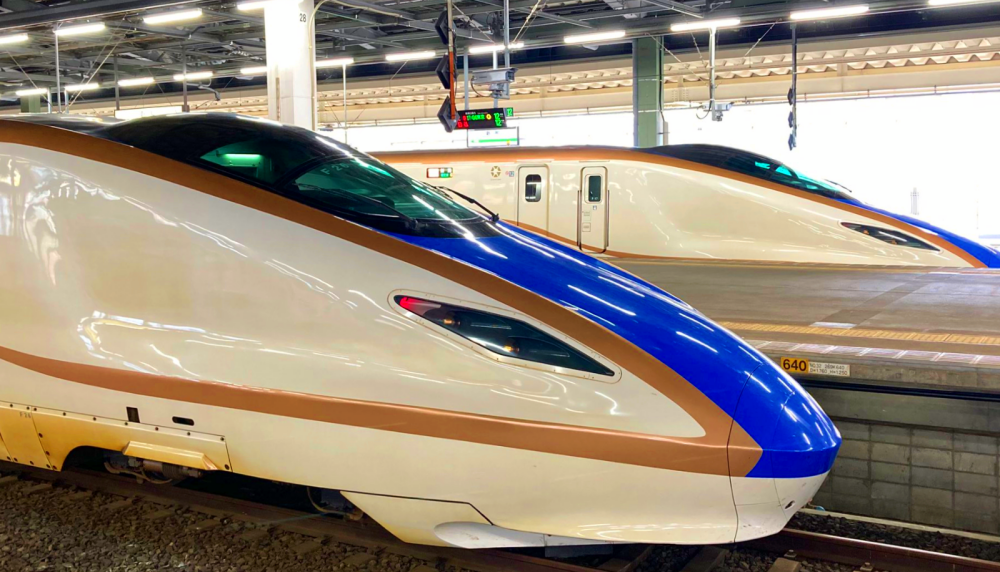
E7/W7 series train set
Route map
Train types
All trains are operated with 12-car E7/W7 series train set.
Kagayaki (HOKURIKU SHINKANSEN)
Kagayaki is the fastest, taking about 2 hours and 30 minutes from Tokyo to Kanazawa with limited stops.

Hakutaka (HOKURIKU SHINKANSEN)
Hakutaka makes more stops, making it convenient for travelers wishing to visit smaller towns.

TSURUGI (HOKURIKU SHINKANSEN)
TSURUGI connects Tsuruga, Kanazawa, and Toyama, serving as a shuttle within the Hokuriku region.

Asama (HOKURIKU SHINKANSEN)
Asama mainly operates between Tokyo and Nagano, stopping at nearly all stations.

Toki (JOETSU SHINKANSEN)
Toki is the faster service, connecting Tokyo and Niigata in about 2 hours, with stops at major stations such as Takasaki, Echigo-Yuzawa, and Nagaoka.

Tanigawa (JOETSU SHINKANSEN)
Tanigawa mainly operates between Tokyo and Echigo-Yuzawa, serving as a convenient option for travelers heading to ski resorts in the Echigo-Yuzawa region

Seat types
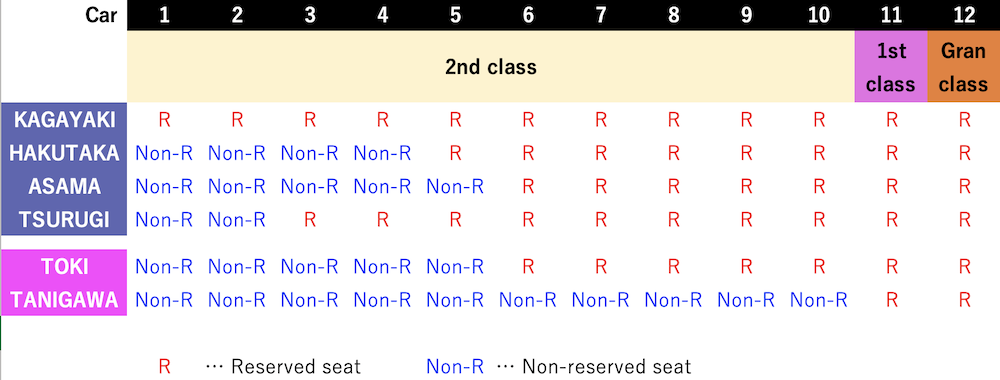
- In the Gran class and Green Car, all seats are reserved.
- On HAKUTAKA, ASAMA, TOKI and TANIGAWA trains, the non-reserved seat cars may differ depending on the train.
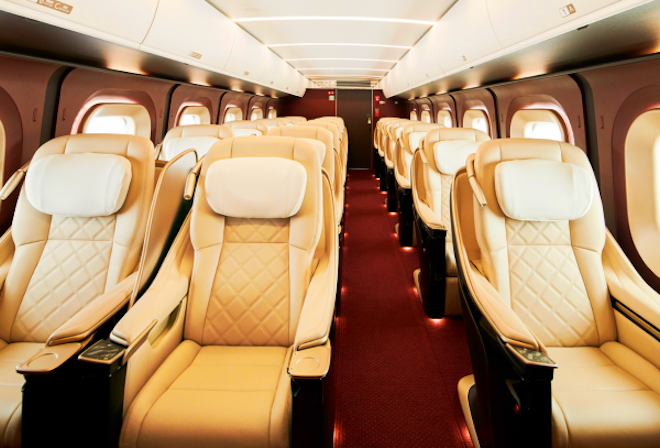
Executive class (Gran class)
Car 12 is Executive class, called ”Gran class.” All seats are reserved. They feature a 1+2 seating layout with a seat pitch of 1,300 mm, offering comfort even on long journeys. In the Gran Class on the "KAGAYAKI", complimentary light meals and drinks (including alcoholic beverages) are provided.
1st class (Green car)
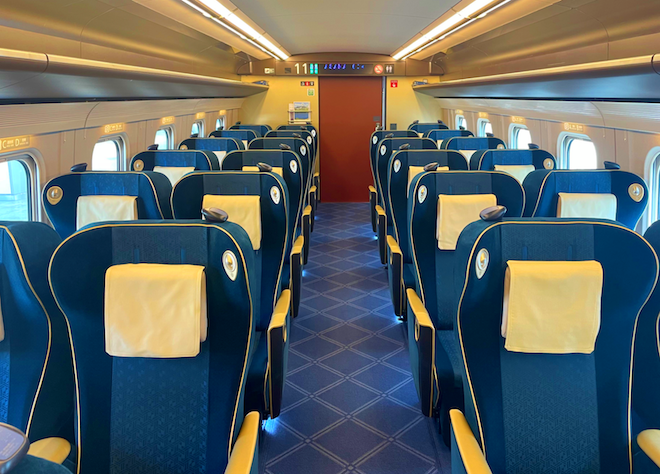
Car 11 is 1st class, called “Green Cars.” All seats are reserved. They feature a 2+2 seating layout with a seat pitch of 1,160 mm, offering comfort even on long journeys.
2nd class (Ordinary car)
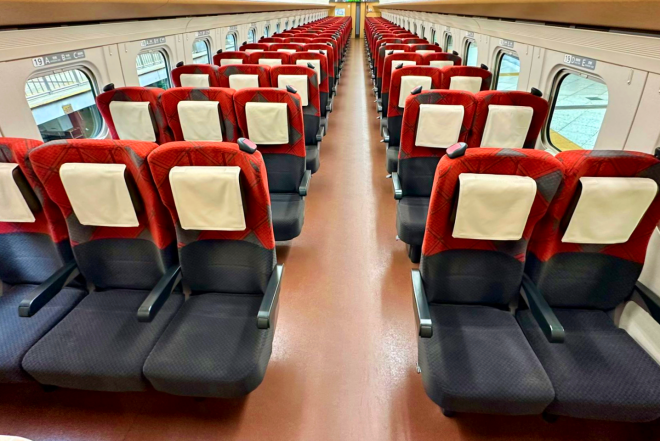
All other cars (excluding Cars 1 to 9) are 2nd class, with a 2+3 seating layout. Reserved and non-reserved seats are the same type.
Stops
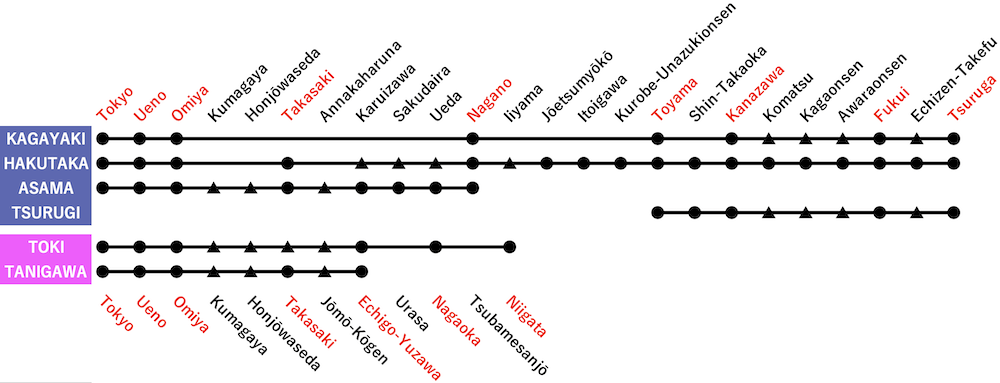
- The stops of the trains vary depending on the train.
- ▲ indicates stations where only some trains stop.
Travel Times and Fares for Major Sections
| Route | Type | Time | Gran class |
1st class |
2nd class (R) |
2nd class (Non-R) |
|---|---|---|---|---|---|---|
| Tokyo - Tsuruga | KAGAYAKI | 3h10m | ¥35010 | ¥24010 | ¥16160 | - |
| Tokyo - Fukui | KAGAYAKI | 2h50m | ¥34460 | ¥23460 | ¥15610 | - |
| Tokyo - Kanazawa | KAGAYAKI | 2h30m | ¥31640 | ¥20640 | ¥14180 | - |
| Tokyo - Toyama | KAGAYAKI | 2h10m | ¥30220 | ¥19220 | ¥12760 | - |
| Tokyo - Nagano | KAGAYAKI | 1h20m | ¥18800 | ¥11800 | ¥8140 | - |
| Tokyo - Karuizawa | HAKUTAKA | 1h20m | ¥11240 | ¥8090 | ¥5820 | ¥5490 |
| Tokyo - Niigata | TOKI | 2h | ¥17370 | ¥14220 | ¥10560 | ¥10230 |
| Tokyo - Nagaoka | TOKI | 1h40m | ¥15720 | ¥12570 | ¥8910 | ¥8580 |
| Tokyo - Echigo-Yuzawa | TOKI | 1h20m | ¥12010 | ¥8860 | ¥6590 | ¥6260 |
- "(R)" means fare with seat reservation.
- "(Non-R)" means fare with Non-seat reservation.
- Children aged 6 to under 12 pay half of the adult fare for 2nd class seats. Children under 6 travel free, but a child fare is required if a seat is reserved.
- The following fares are standard fares. During busy seasons, an additional ¥400 applies. During off-peak seasons, ¥200 is discounted.
By transferring from the Limited Express Thunderbird to the Tsurugi at Tsuruga Station, you can conveniently access major destinations such as Osaka, Kyoto, and Kanazawa in the Hokuriku region.
| Route | Type | Time | 1st class |
2nd class (R) |
|---|---|---|---|---|
| Osaka - Toyama | Thunderbird & TSURUGI | 3h | ¥15160 | ¥10090 |
| Osaka - Kanazawa | Thunderbird & TSURUGI | 2h30m | ¥14280 | ¥9210 |
| Osaka - Fukui | Thunderbird & TSURUGI | 2h | ¥10660 | ¥7090 |
| Kyoto - Toyama | Thunderbird & TSURUGI | 2h40m | ¥12190 | ¥8620 |
| Kyoto - Kanazawa | Thunderbird & TSURUGI | 2h20m | ¥11090 | ¥7520 |
| Kyoto - Fukui | Thunderbird & TSURUGI | 1h40m | ¥7800 | ¥5730 |
Onboard facilities
Restrooms
Located approximately once every two cars.

Luggage storage
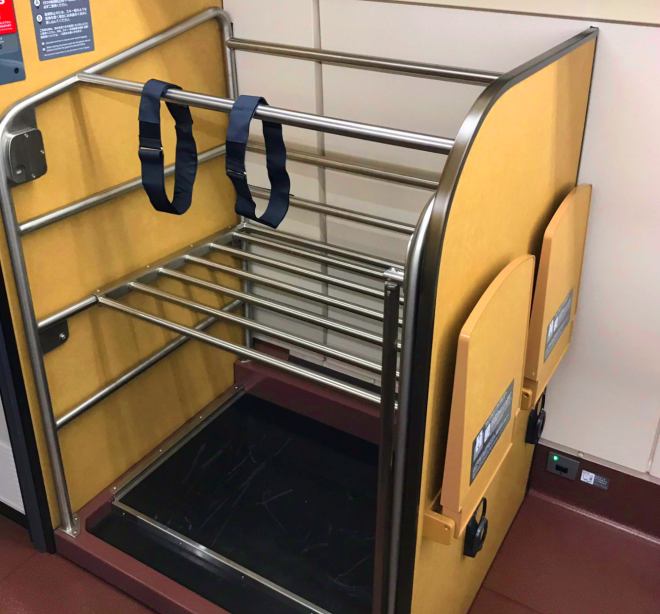
Luggage storage is available in each car.
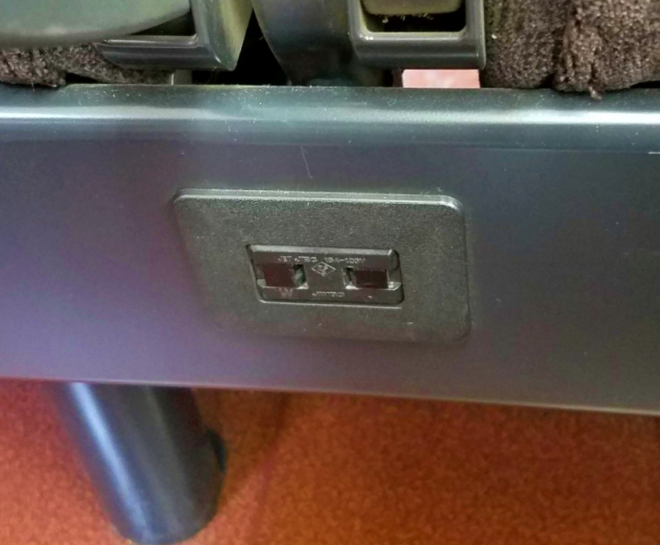
Power outlets
Every seat is equipped with a power outlet.
Wi-Fi
All trains offer free Wi-Fi service.
Timetable
The timetable is frequently updated. Please check the latest version on the JR East website.
Major sightseeing spots
TOKYO
Japan’s capital, Tokyo, is a city where tradition and modern culture coexist. From historic sites such as Senso-ji Temple and the Imperial Palace to the bustling districts of Shibuya and Shinjuku, it offers endless attractions.
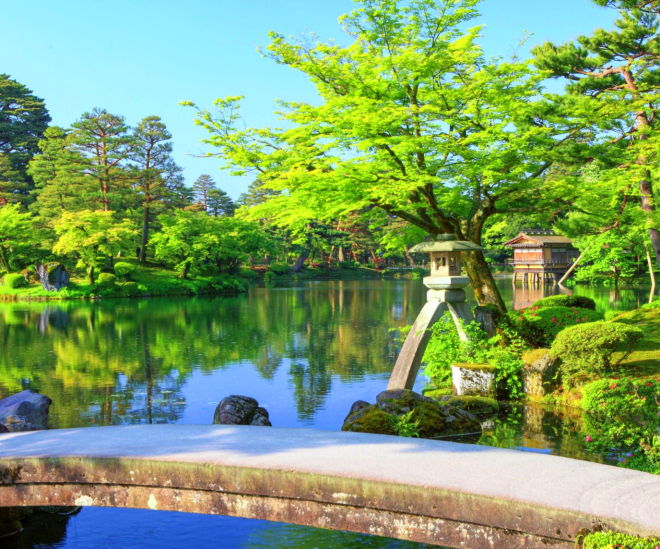
KANAZAWA
Kanazawa is renowned for Kenrokuen Garden, one of Japan’s three most beautiful gardens, and its well-preserved samurai and geisha districts. The city offers a harmonious blend of tradition, art, and cuisine, including fresh seafood from the Sea of Japan.
FUKUI
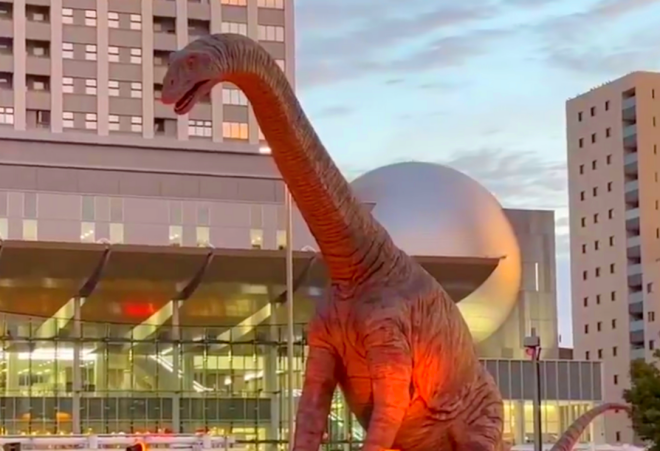
Fukui is home to the spectacular Tojinbo Cliffs along the Sea of Japan and the historic Eiheiji Temple. Visitors can also explore the Fukui Dinosaur Museum, one of the world’s finest, making it an exciting destination for families.
TOYAMA
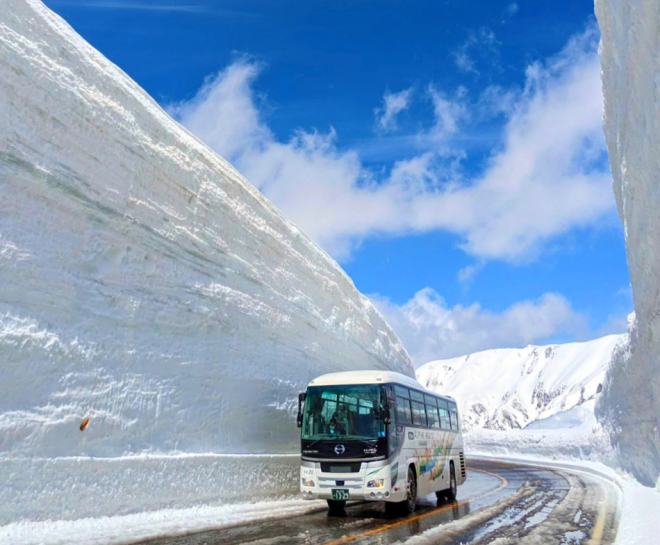
Toyama is the gateway to the Tateyama Kurobe Alpine Route, offering majestic mountain views and the impressive Kurobe Dam. The region is also famous for its glass art and fresh seafood, particularly white shrimp.
NAGANO
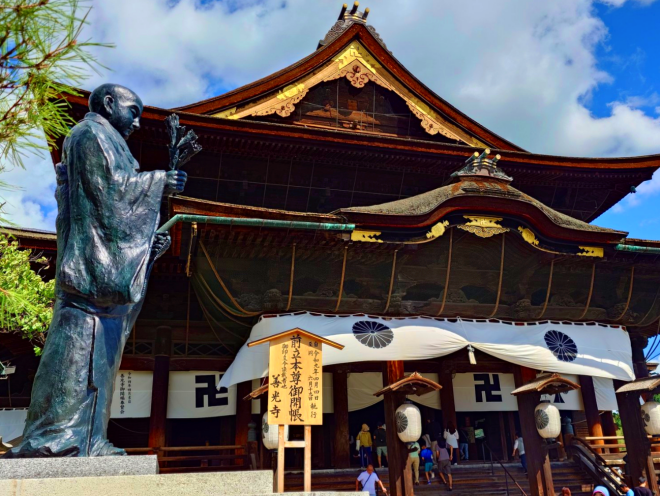
Nagano, host of the 1998 Winter Olympics, is known for Zenko-ji Temple and nearby hot spring towns such as Yudanaka and Shibu Onsen. In winter, snow monkeys bathing in hot springs attract visitors from around the world.
KARUIZAWA
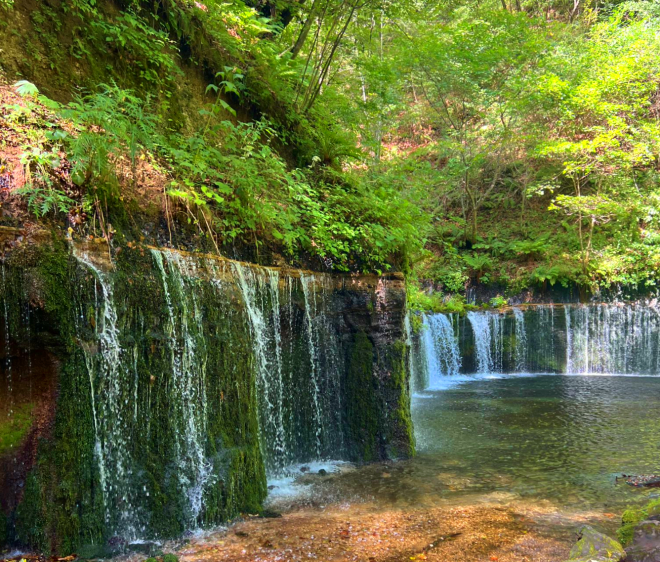
Karuizawa is a popular resort town nestled in the mountains, offering stylish shopping streets, outdoor activities, and refreshing summer retreats. Its autumn foliage and winter ski resorts also make it a year-round destination.
NIIGATA
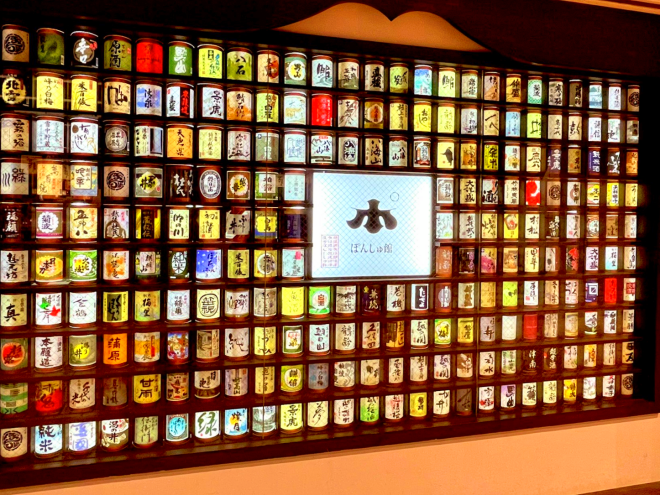
Niigata is famous for its high-quality rice and sake, as well as stunning coastal scenery along the Sea of Japan. Visitors can enjoy Sado Island, known for its gold mine history and traditional performing arts.
NAGAOKA
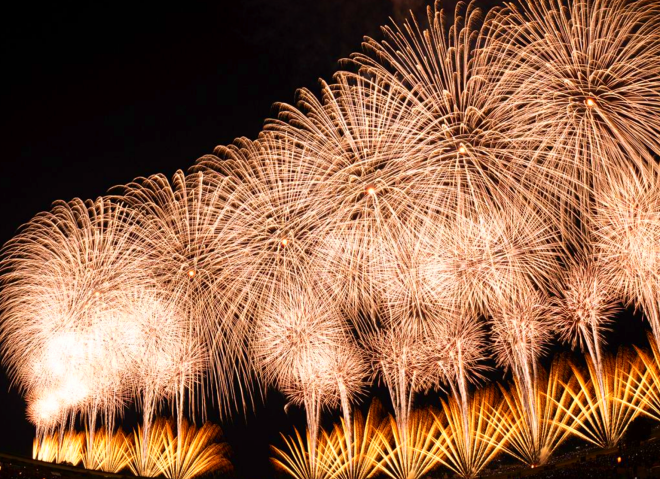
Nagaoka is celebrated for its spectacular summer fireworks festival, one of Japan’s largest. The city also offers historic sites and local delicacies, making it a charming stop in the Niigata region.
Important Notes
- Holidays in May, August, and December are extremely crowded.
- The morning and evening hours are also very crowded.
- The Kagayaki tends to be extremely crowded, so early reservations are highly recommended.